CNC Machining
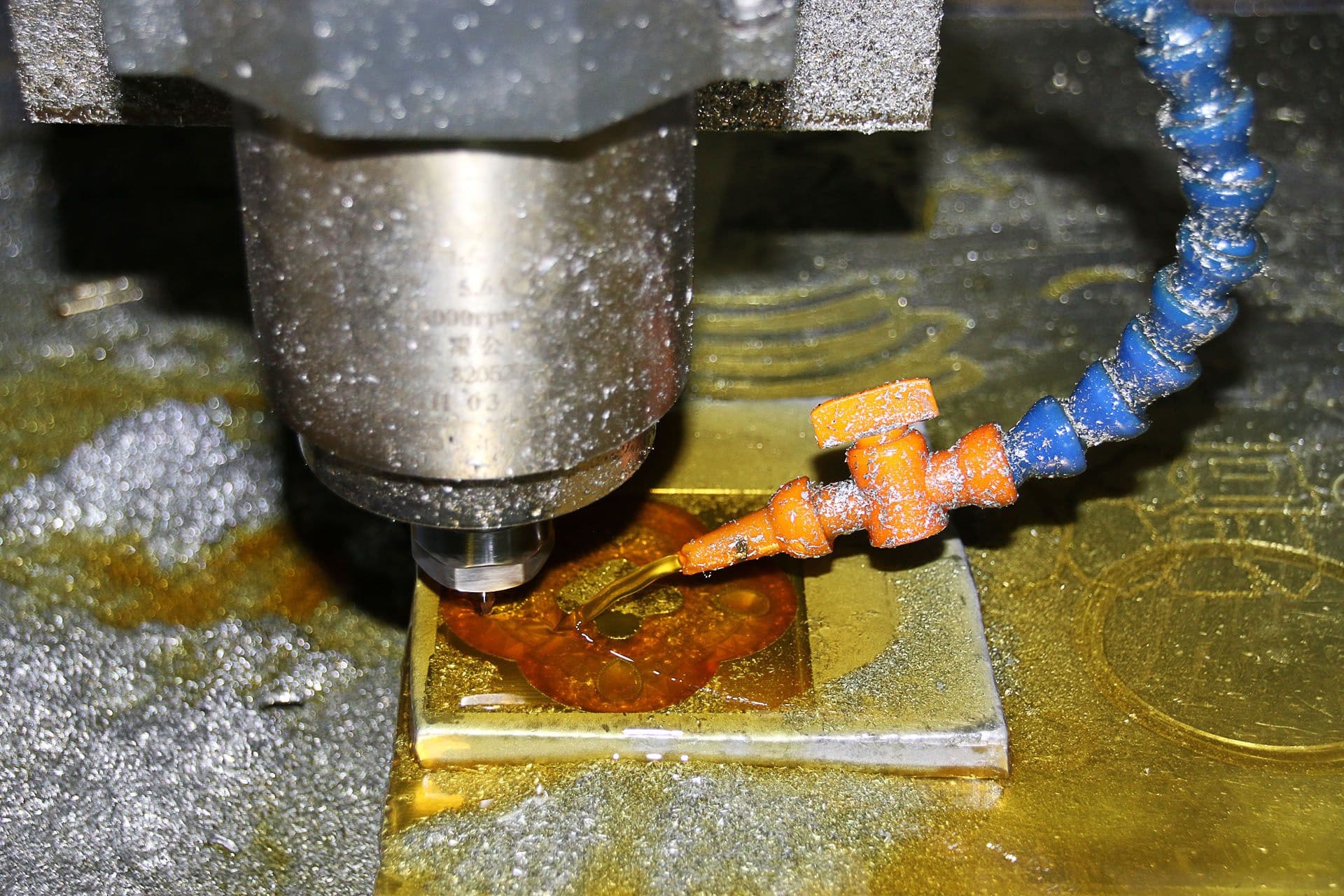
Four vertical machining centers — three 3-axis, plus a Haas VF-3ss with a 4th axis and an automatic pallet changer for longer unattended runs. Most of our CNC work finishes molded or cast parts — cutting bores, threads, and flat sealing surfaces that as-molded or as-cast tolerance can't hold — and we also run stand-alone CNC work for parts that don't start as a molding or casting job.
Typical applications
- Secondary machining of injection molded and die cast parts
- Stand-alone precision machined metal and plastic components
- Prototype and low-volume machined parts
- Fixture and tooling component machining for our own tool room
Process overview
- 1
Program & fixture planning
Toolpaths and fixturing are planned around the part's material and, where relevant, its molded/cast geometry.
- 2
Machining
Parts are cut to print tolerance on our vertical machining centers. Features on more than one face can run on the VF-3ss 4th axis in a single setup instead of being re-fixtured.
- 3
Longer runs
The Haas VF-3ss automatic pallet changer lets a second setup load while the first runs, which keeps per-part cost down on higher-quantity work.
- 4
Inspection
Critical dimensions are measured and documented against the print.
Materials
- Aluminum and zinc (typically secondary machining of castings)
- Engineering plastics (typically secondary machining of molded parts)
- Other metals on request — confirm machinability and tooling requirements during quoting
- We do NOT anneal or heat treat production parts. Our heat treatment equipment is used only for in-house repair of tool cores and cavities — if your part needs a heat treatment or annealing step, it has to be arranged separately
Part design considerations
- Datum strategy and how the part will be held during machining
- Tolerance requirements relative to the base process (molding or casting) versus machined features
DFM guidance
- Identify which features genuinely need machined tolerance rather than defaulting every dimension to a tight callout — it keeps cost down
- Tell us your fixture constraints (delicate cosmetic surfaces, thin walls) up front
Quality controls
- Dimensional inspection against the print
- Documented inspection records available on request
Secondary operations available
- Deburring and finishing
- Powder coating
- Assembly
Frequently asked questions
Do you do stand-alone CNC machining, not tied to molding or casting?
Yes — send prints/models and material requirements and we'll quote it directly.
Can you heat treat or anneal our parts?
No. We do not anneal or heat treat production parts. We do have heat treatment capability, but it is used solely for repairing tool cores and cavities in our own tool room. If your part requires a heat treatment or stress-relief step, that has to be arranged with a separate supplier — tell us at RFQ so it is planned into the routing rather than discovered later.
What CNC equipment do you run?
Four vertical machining centers: a Haas VF-3ss with a 4th axis and an automatic pallet changer, a Haas VF-1, a Fadal VMC 4020, and a Fadal VMC 6030. The VF-3ss 4th axis runs both indexed (positional) and simultaneous, so parts with features on multiple faces or true rotary geometry can be cut in one setup. We do NOT run 5-axis machining — if your part needs it, tell us at RFQ and we'll be straight with you about fit.
Ready to talk about your project?
Send your drawings or describe your part — an engineer will follow up, not a sales queue.