Powder Coating
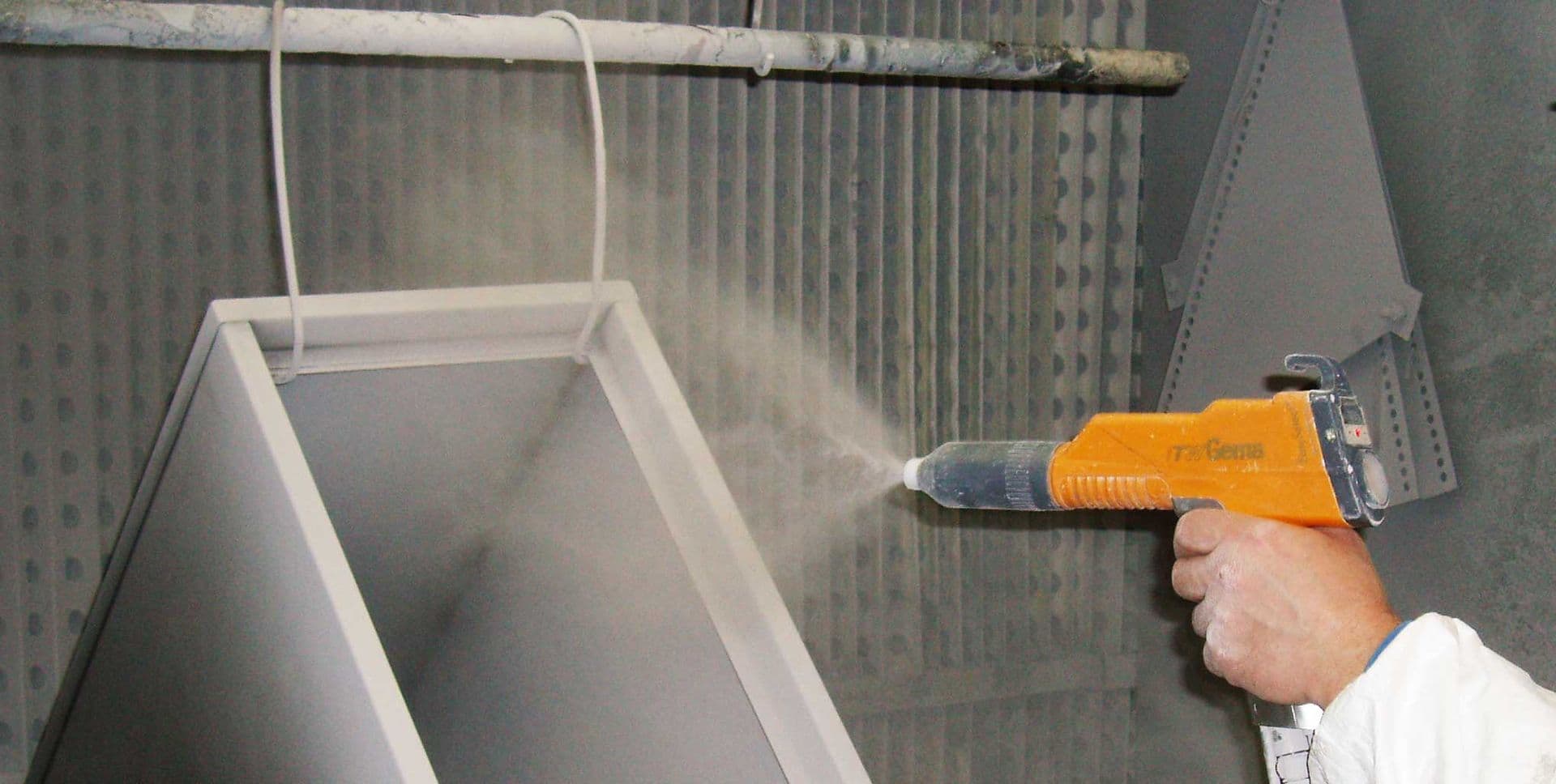
Our powder coating line runs on the same production floor as molding, casting, and machining — parts move directly from those processes into finishing without leaving the building. It is a manual line with three booths (each with powder reclaim) and two curing ovens, running Class B work.
Typical applications
- Corrosion protection for aluminum and zinc die cast parts
- Cosmetic, color-matched finishes for consumer and industrial products
- Textured or functional coatings for grip or durability
Process overview
- 1
Surface preparation
Parts are cleaned and prepped — including sandblasting, deburring, and sanding where needed — appropriate to the substrate.
- 2
Conversion coating
Parts receive Sanchem SafeGard CC-3400 conversion coating (the gold-colored pretreatment shops often call “gold Alodine”). It adds corrosion protection and gives the powder a surface to key into, which is what makes the finish durable rather than merely cosmetic.
- 3
Masking & fixturing
Custom masking, plugging, and fixtures protect threads, bores, ground contacts, and any other feature that must stay coating-free.
- 4
Application & cure
Powder is applied in one of three reclaim-equipped booths and cured in one of two ovens to the specified color, gloss, and film thickness.
- 5
Inspection
Coverage, film thickness, and adhesion are checked against the specification before parts move on.
Part design considerations
- Specify the powder itself, not just the color — chemistry (polyester, epoxy, hybrid, and so on), the manufacturer or brand, and the product name or number. "Black powder coat" is not a specification: two blacks from different chemistries can behave completely differently for UV, chemical resistance, and hardness.
- Surfaces that must remain uncoated (threads, ground contacts) need to be identified up front
- Color and gloss standards should be confirmed against a physical sample where possible
- Wrex quotes and runs Class B powder coating. If the part needs a Class A cosmetic/show-surface finish, say so at RFQ — it is not what a standard quote covers.
- Every part needs somewhere to hang — a hole or feature the part can be racked from through spray and cure. Parts with no hanging point need a fixture designed, which adds cost.
- Ball burnishing and powder coating are mutually exclusive: a burnished surface will not hold powder. Pick one finish or the other for a given surface. (Vibratory deburring, by contrast, is fine ahead of powder.)
DFM guidance
- Design masking-friendly features (accessible flats rather than recessed threads) where coating exclusion zones are required
- Put the full powder callout on the drawing — chemistry, brand, and product number — the same way you would call out a resin or an alloy
Quality controls
- Powder coat film thickness measurement
- Cross-hatch scratch and tape adhesion test
- Solvent test
- Visual inspection for coverage, color match, and defects
Secondary operations available
- Sandblasting
- Custom masking and plugging
- Assembly
- Pad printing after coating
Frequently asked questions
Can you powder coat parts we supply, not made by Wrex?
Yes — send parts and finish requirements (color, gloss, exclusion zones) for a quote. One limitation: we do not run pre-treatment on outside parts. Our conversion coating tanks are kept for parts made here so they are not contaminated by unknown substrates or residues. Outside parts must arrive already clean and, where the finish depends on it, already pre-treated.
Do you offer anodizing or wet paint?
No. Wrex does powder coating only — we do not anodize and we do not run wet paint. If your part needs either, we'll tell you at RFQ rather than after you've committed.
What do you need from us to quote a powder coat?
The full powder callout, not just a color: the chemistry (polyester, epoxy, hybrid, and so on), the manufacturer or brand, and the product name or number — plus gloss, any exclusion zones that must stay bare, and a physical color standard if one exists. "Black, semi-gloss" is not enough to buy powder against, and two blacks of different chemistries can perform very differently outdoors or against chemicals.
What cosmetic class do you quote?
Class B. Our quotes reflect Class B powder coating only. If your part needs a Class A cosmetic or show-surface finish, tell us at RFQ so we can address it directly rather than have it surface at first article — a Class A expectation against a Class B quote is one of the most common finishing disputes in this industry.
What pretreatment do you use before powder?
Sanchem SafeGard CC-3400 conversion coating, the gold-colored pretreatment often referred to generically as “gold Alodine.” It provides corrosion protection and improves powder adhesion. If your specification calls out a particular pretreatment chemistry, send it with the RFQ so we can confirm compatibility before quoting.
Ready to talk about your project?
Send your drawings or describe your part — an engineer will follow up, not a sales queue.