Injection Mold Design & Tooling
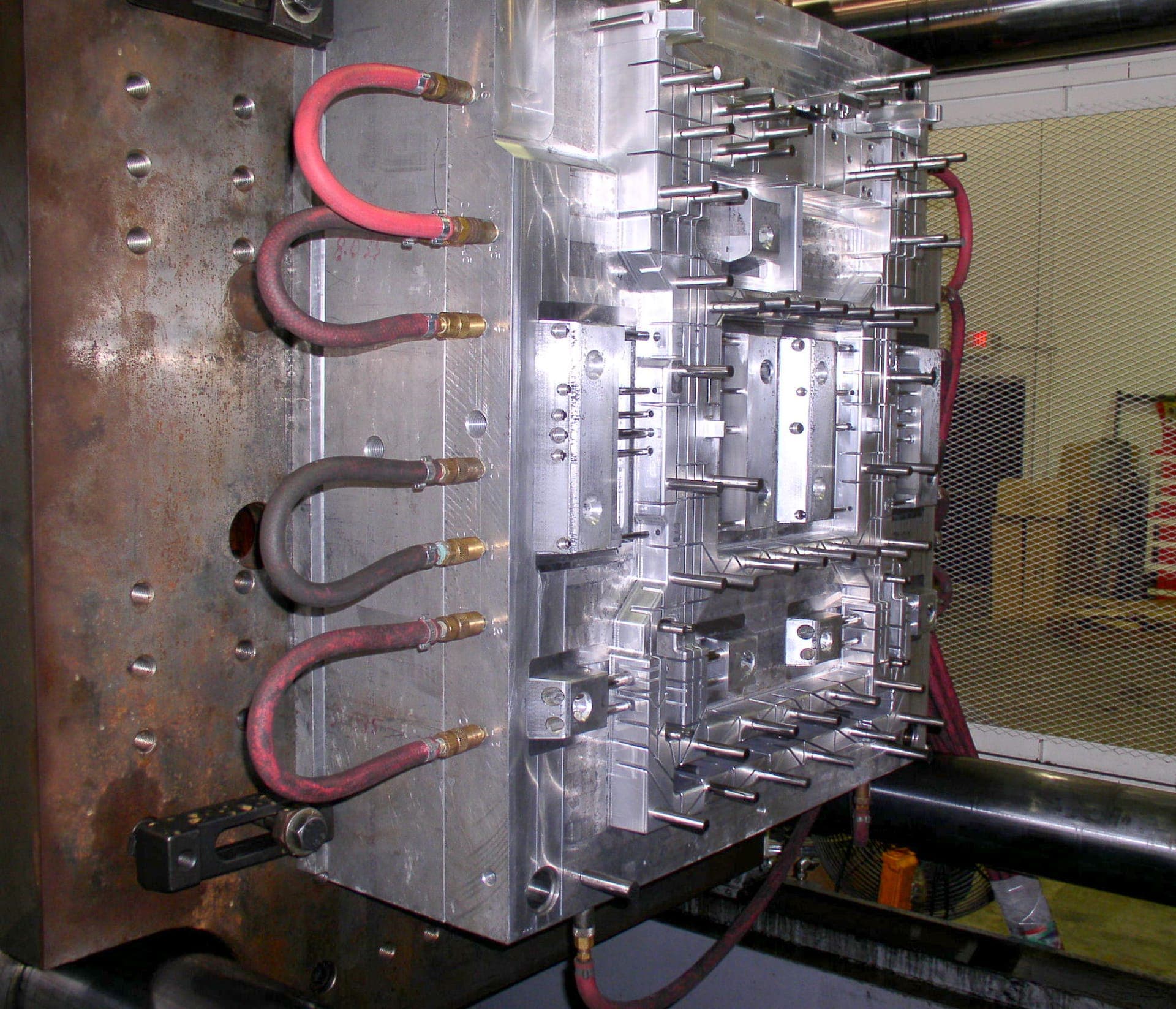
Tooling decisions made at quoting time — cavitation, steel selection, tool class — determine both your unit cost and how long the tool will run before it needs rework. We design and build tools in-house so those decisions are made by the people who will also run the tool in production.
Typical applications
- Single-cavity prototype and low-volume production tooling
- Multi-cavity family and production tools
- Cold runner tooling (most of our current tools) and hot runner tooling on request
- Tooling for insert-molded and overmolded parts
Process overview
- 1
Tool class & cavitation recommendation
Based on your annual volume and part complexity, we recommend a tool steel and cavitation that matches expected tool life to your program. (Tooling approach is a manufacturing decision we do advise on — unlike part material or product design.)
- 2
Mold design review
Gate location, parting line, ejection, and cooling layout are reviewed with you before cutting steel.
- 3
Build & sampling
Tools are built and sampled in-house, with first-article measurements against your print.
- 4
Production release
The tool is released to production once first articles are approved.
Part design considerations
- Parting line location relative to cosmetic and functional surfaces
- Ejection method and its visible impact on show surfaces
- Cooling channel layout and its effect on cycle time and warp
DFM guidance
- Tool class should match real program volume — over-building a tool wastes budget, under-building it costs more in the long run through unplanned rework
- Confirm cavitation early; adding cavities later is a new tool, not a modification
Quality controls
- First-article inspection report against the customer print
- Tool maintenance and preventive-maintenance logging for production tools
Secondary operations available
- EDM and wire EDM for detail features
- Mold texturing coordination
- Mold storage and maintenance
Frequently asked questions
Who owns the tool once it's built?
Standard practice is customer ownership of tooling paid for by the customer, documented in your quote — confirm terms with your Wrex contact before ordering.
Can you build a tool from our design, or do you design it too?
Both — we'll build to a supplied mold design after review, or design the tool in-house from your part model.
Ready to talk about your project?
Send your drawings or describe your part — an engineer will follow up, not a sales queue.