Resources
Tooling Specifications
Every line item that appears on a Wrex tool quotation, explained — SPI tool classes, SPI surface finishes, steels, gating, ejection, and actions. Read this before specifying a tool and the quote conversation gets much shorter.
SPI tool classes
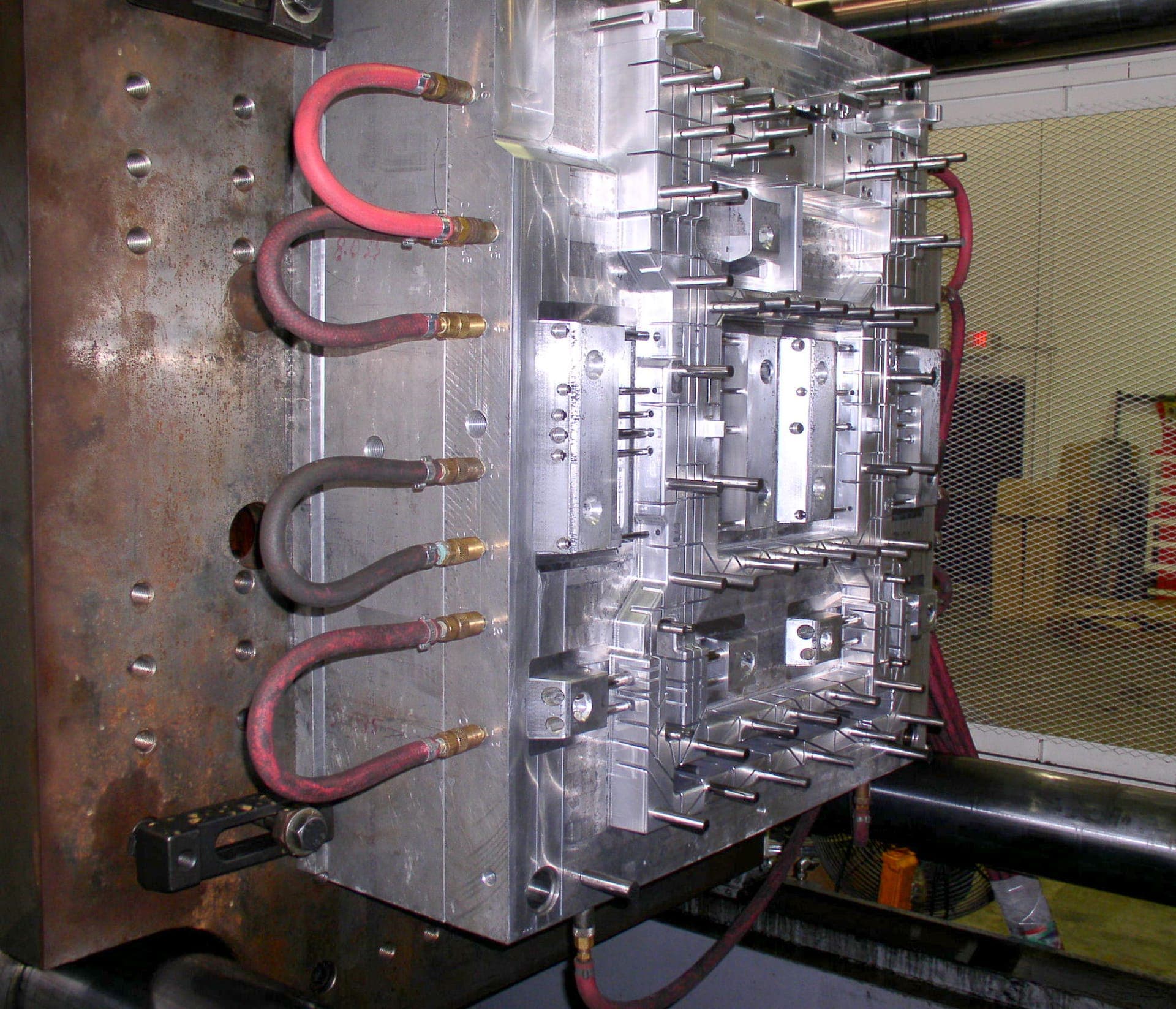
The SPI classification sets the expected life of a plastic injection mold, which in turn drives steel selection, construction, and cost. Picking a class is really a question about your program: how many parts, over how long, in what material. Die cast tooling is not rated on this scale — see die cast mold life for the standard quoted figure.
| Class | Rated cycles | What it is | When it fits |
|---|---|---|---|
| Class 101 | 1,000,000+ | Highest-grade production tool, built for extremely high volume. Hardened steel throughout, typically with hardened cavities and cores, plated as needed, and full cooling. | Long-running, high-volume programs where tooling cost is amortized over millions of parts and downtime is expensive. |
| Class 102 | Up to 1,000,000 | High-quality production tool for medium-to-high volume. Hardened steel cavities and cores, suitable for abrasive materials and tight tolerances. | Established production parts with sustained annual volume, including glass-filled resins that would wear a softer tool. |
| Class 103 | Up to 500,000 | Medium-volume production tool. The most commonly quoted class for typical production programs. | The default starting point for most production work — good balance of tool cost against expected life. |
| Class 104 | Up to 100,000 | Low-volume production tool, often built in softer steel or aluminum with fewer hardened components. | Limited production runs, bridge tooling, or parts whose design may still evolve. |
| Class 105 | Up to 500 | Prototype tool. Built to produce a small quantity of representative parts, not to survive production. | Design validation and early samples, where the goal is real molded parts in the real material before committing to production tooling. |
Rated shot count matters after the build too: Wrex maintains and stores customer tooling at no cost while a project is in active production and the tool remains within its rated shot count — see Quoting & Terms.
SPI mold surface finishes
Required on every new plastic part at Wrex, for both cavity and core. The tool is cut to the finish you specify — changing it afterward means reworking steel. Note that the rougher D grades are effectively a texture and need more draft, not less.
| Grade | Produced by | Resulting finish | Notes |
|---|---|---|---|
| A-1 | Grade #3 diamond buff | Super high gloss / optical finish | Most expensive to produce and maintain; requires draft accordingly |
| A-2 | Grade #6 diamond buff | High gloss | Common for cosmetic, glossy consumer surfaces |
| A-3 | Grade #15 diamond buff | Normal gloss | Good general-purpose polished finish |
| B-1 | 600 grit paper | Fine semi-gloss | |
| B-2 | 400 grit paper | Medium semi-gloss | A frequently specified general-purpose finish |
| B-3 | 320 grit paper | Normal semi-gloss | |
| C-1 | 600 grit stone | Fine matte | |
| C-2 | 400 grit stone | Medium matte | |
| C-3 | 320 grit stone | Normal matte | Hides minor cosmetic variation well |
| D-1 | Dry blast, glass bead | Satin textured | Requires more draft than polished finishes |
| D-2 | Dry blast, #240 oxide | Dull textured | Requires more draft |
| D-3 | Dry blast, #24 oxide | Rough textured | Requires the most draft of the standard finishes |
Cavity & core steels
Steel selection is where tool class becomes a real purchase decision. The cavity and core do the work — they form the part, take the wear, and determine how long the tool holds tolerance.
On the life figures below: they are indicative, and assume a well-maintained tool running a compatible material. Abrasive fillers, aggressive resins, poor cooling, or missed maintenance all shorten them substantially. The tool class and shot count on your quotation govern — not this table.
| Steel | Hardness | Character | Indicative life | Best for | Watch out |
|---|---|---|---|---|---|
| P-20 | 28–32 HRC (pre-hardened) | General-purpose, pre-hardened so it machines readily and needs no heat treat after cutting | Up to ~500,000 cycles | Unfilled resins on Class 103/104 tooling — the everyday workhorse | Too soft for glass-filled or mineral-filled resins over long runs; wears at gates and parting lines |
| H-13 | 46–52 HRC (hardened) | Hot-work tool steel with excellent thermal fatigue and heat-checking resistance | 1,000,000+ cycles | High-volume Class 101/102 plastic tooling, and the standard choice for die casting dies | Costs more and requires heat treat; overkill for short-run programs |
| 420 Stainless | 48–52 HRC (hardened) | Corrosion-resistant, takes a good polish | Up to ~1,000,000 cycles | Corrosive resins (PVC, some flame-retardant and acetal grades) and humid plant environments | Lower thermal conductivity than P-20/H-13 — cooling layout matters more |
| S136 | 48–52 HRC (hardened) | Premium stainless with excellent polishability and corrosion resistance | 1,000,000+ cycles | Optical, medical, and high-gloss cosmetic parts needing SPI A-1/A-2 finishes | Highest steel cost of the common options; specify only where the finish or corrosion need justifies it |
| S-7 | 54–56 HRC (hardened) | Shock-resistant tool steel | Component-dependent | Inserts, cores, and details subject to impact or high stress | Specified for specific components rather than whole cavities |
| A-2 | 56–60 HRC (hardened) | Air-hardening, good wear resistance and dimensional stability through heat treat | Component-dependent | Slides, lifters, wear components, and abrasion-prone details | Harder and more brittle than S-7 where impact loading is present |
| NAK80 | 38–42 HRC (pre-hardened) | Pre-hardened with excellent polishability — reaches high finishes without heat treat | Up to ~1,000,000 cycles | Cavity inserts needing a high cosmetic finish without the cost and distortion risk of hardening | Softer than fully hardened steels; not the choice for heavily filled resins |
Mold base materials
The base holds everything together and carries the guiding, clamping, and ejection loads. It doesn't need to match the cavity steel — pairing a hardened cavity with an economical base is normal and sensible.
| Material | Hardness | Indicative life | Best for | Watch out |
|---|---|---|---|---|
| Mild steel (e.g. 1018 / A36) | Not hardened | Low to moderate | Economy bases on prototype and low-volume tooling where the base sees little wear | Guide components and wear surfaces will need attention sooner; no corrosion resistance |
| P-20 base | 28–32 HRC (pre-hardened) | High — matches typical production tool life | The standard production mold base, including DME-standard bases | Costs more than mild steel; unnecessary for a 500-shot prototype tool |
| Aluminum (e.g. QC-7 / 7075) | Not hardened | Low — prototype and bridge tooling range | Fast-turnaround prototype and low-volume tools; machines quickly and its high thermal conductivity can shorten cycle time | Wears and deforms far faster than steel; not a production base |
| NAK80 | 38–42 HRC (pre-hardened) | High | Bases or base inserts where polishability and stability matter | Premium cost; usually specified for cavity inserts rather than whole bases |
| DME standard bases | Varies by series | Matches the steel specified | Standardized, readily replaceable base components and faster tool builds | Standard sizes may not suit unusual part footprints |
What actually drives steel selection
Production volume
The primary driver. A 500-shot prototype in H-13 wastes money; a million-cycle program in P-20 wears out and costs more in downtime and repair than the steel ever saved.
Material abrasiveness
Glass- and mineral-filled resins act like a slurry of cutting media. They push selection toward hardened steel (H-13, 420SS) regardless of volume, and gate areas often get hardened inserts.
Material corrosiveness
PVC, some flame-retardant grades, and resins that off-gas acidic byproducts attack standard tool steels. Stainless (420SS, S136) is the answer.
Required surface finish
SPI A-1/A-2 finishes need a steel that polishes cleanly — S136 or NAK80. You cannot reliably reach an optical finish on ordinary P-20.
Thermal demands
Die casting subjects dies to severe thermal cycling, which is why H-13 is the standard there. On the plastics side, cooling layout and steel conductivity together set achievable cycle time.
Tool specification options
These are the choices made on a tool quotation. You don't need to arrive with all of them decided — but the more that are settled, the more accurate the quote.
Mold type
- Injection
- Die cast
- Complete
- Insert
- Insulated runner
A complete mold is a stand-alone tool; an insert mold runs in an existing master unit base.
Texture
- Mold-Tech textures
- SPI D-series blast finishes
- Custom texture on request
Mold-Tech is the industry texture standard and is quoted per texture and per surface. Textured surfaces need MORE draft than polished ones — confirm the texture before the tool is cut, because adding it later means re-working steel.
Two-material parts
- Single shot
- Overmolding as two separate moldings
Wrex does NOT run 2K (two-shot) molding. Two-material parts are produced as two separate molding operations instead — the substrate is molded first, then loaded into a second tool and overmolded. A soft TPU over a harder nylon is a typical example. It needs two tools rather than one, and the substrate must be designed with features that locate and lock it in the overmold tool.
Mold construction
- Standard 2-plate
- Three-plate
- Stripper plate
- Manifold (hot runner)
- Hand lay-ins
Two-plate is the most common and lowest cost. Three-plate and manifold tools allow gate locations a two-plate can't reach.
Cavity & core steels
- H-13
- P-20
- 420 stainless
- S-7
- A-2
- S136
Steel selection follows expected tool life and material abrasiveness. Glass-filled resins push toward harder steels; corrosive resins toward stainless.
Mold base material
- Mild steel
- Aluminum
- NAK80
- DME standard bases
Aluminum bases suit prototype and low-volume tools; steel bases suit production life.
Slides & actions
- Angle pins
- Cam
- Hydraulic cylinder
- Air cylinder
Required wherever a feature undercuts the mold-opening direction. Each action adds tool cost and maintenance — worth designing out when practical.
Ejection
- Ejector pins
- Stripper sleeve
- Stripper ring
- Lift pin
- Air poppet
- Accelerated ejection
- Two-stage ejection
- Operator removal
Ejection leaves witness marks — tell us which surfaces are cosmetic so placement avoids them.
Gating
- Tab
- Tunnel (sub)
- Half pin
- Sprue
- Hot sprue
- Hot tip
- Three-plate
Gate type and location drive fill pattern, knit-line placement, and the visible gate witness.
Inserts
- Hand lay-in
- Threaded
- Molded-in
- Sprue
Hand-loaded inserts add cycle time; volume determines whether automated loading is worth tooling in.
Cooling
- Mold base
- Cavities & cores
- Slides
Cooling layout drives cycle time and warp. Wrex runs chilled water or water heated below boiling — never hot oil.
Special features
- Guided ejection
- Taper interlocks
- Early return
- Runner shut-off
- Engraving
- Limit switches
Specify engraving (cavity ID, date wheels, recycling marks) at quote time — adding it later means re-cutting steel.
Related
- Quoting, Lead Times & Terms — tooling payment terms, lead times, ownership and storage
- Mold Design & Tooling — how we design and build
- Die Cast Tooling & Trim Dies
- DFM Resources — design rules that affect tool cost
- Manufacturing Glossary
Ready to talk about your project?
Send your drawings or describe your part — an engineer will follow up, not a sales queue.