Resources
Finish & Coating Guide
Finishing is where parts get rejected for reasons nobody wrote on the print. This guide covers what each option actually does, what it costs you in tolerance, and the masking decisions that need to be made before tooling — not after first article.
Finish options compared
| Finish | Substrates | Appearance | Durability | Design considerations |
|---|---|---|---|---|
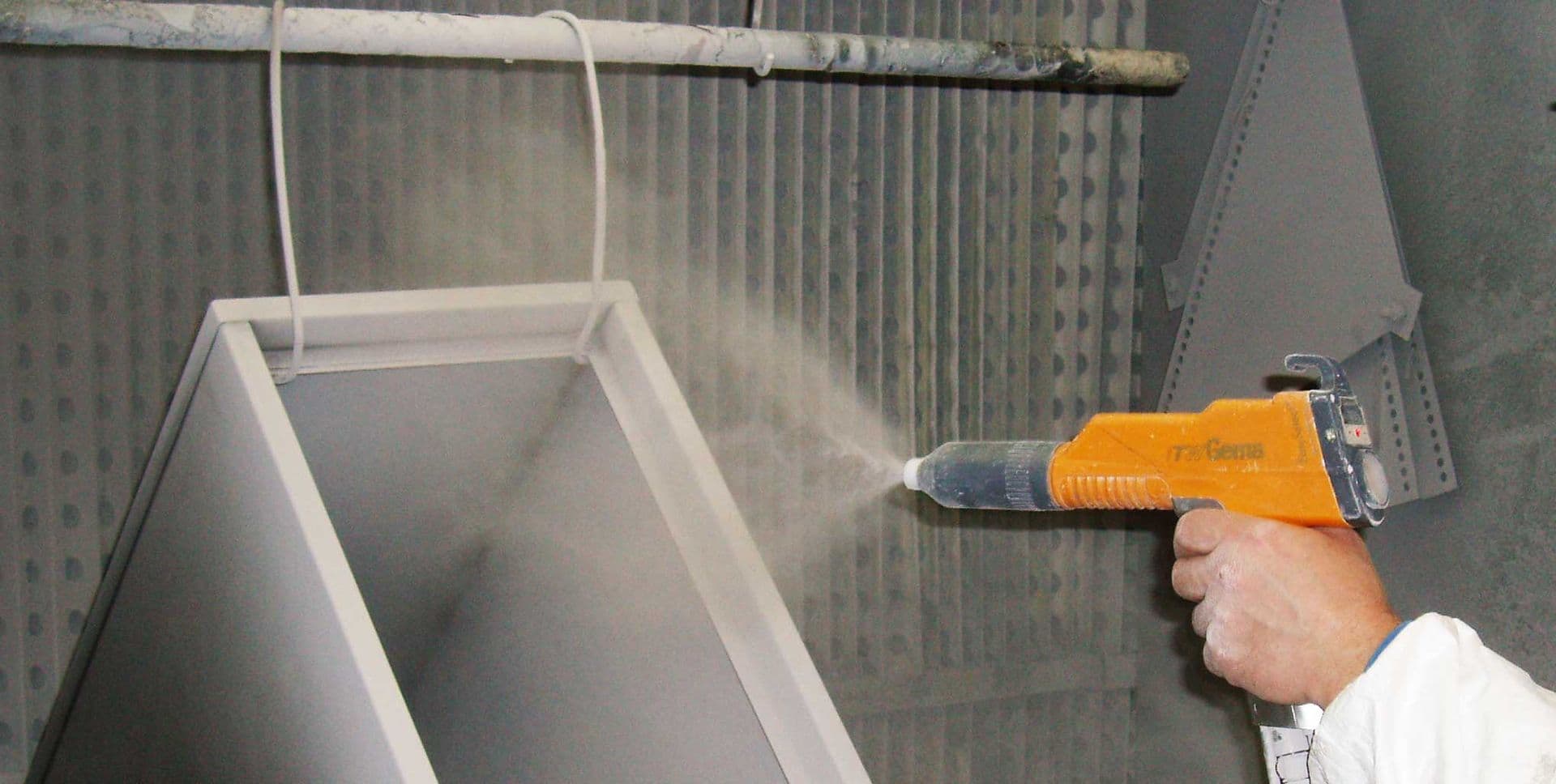
| Powder coating | Aluminum, zinc, steel | Uniform color, matte through high gloss, textured options | Excellent — thick film, good chip/UV/corrosion resistance | Adds roughly 0.002–0.004 in per surface; mask threads, bearing bores, and ground contacts |
| Conversion coating (Sanchem SafeGard CC-3400) | Aluminum | Gold, retains metallic appearance | Moderate corrosion protection; our standard pre-treatment under powder | Very thin — preserves tight tolerances; also improves powder adhesion and keeps electrical conductivity |
| Plating prep (zinc castings) | Zinc (Zamak) | Bright chrome/nickel/brass decorative finishes | High, when substrate surface quality is good | Zinc's smooth as-cast surface is why plated hardware is usually zinc, not aluminum; porosity ruins plating — flag plating at RFQ so casting parameters suit it |
| Vibratory deburring / tumbling | All metals, some plastics | Uniform satin; removes flash, sharp edges, gate witness | N/A — a surface prep, not a coating | Media and cycle chosen per part; can slightly round sharp edges (usually desirable, occasionally not) |
| Ball burnishing | Zinc, aluminum | Bright, lightly polished | Work-hardens the surface slightly | Often run after deburring where a brighter as-shipped part is wanted without plating |
| Sandblasting | Aluminum, zinc, steel | Uniform matte texture | Surface prep; improves coating adhesion | Hides minor cosmetic variation; also the standard prep step ahead of powder coating |
| Pad printing | Plastics, coated metals | Printed logos, legends, indicators — multi-color possible | Good on a properly prepped surface; can be over-coated for wear resistance | Needs a reasonably flat/gently curved area; applied after coating, not before |
| As-cast / as-molded | All | Raw process finish, parting line and gate witness visible | No added corrosion protection | Lowest cost and fastest — the right answer for internal, non-cosmetic parts |
Specifying the powder (color is not a spec)
The most common gap on an incoming finishing print is a color and nothing else. “Black, semi-gloss” does not identify a product we can buy, and two blacks of different chemistries can behave completely differently once the part is in service. To quote and purchase against, we need:
- Chemistry — polyester, epoxy, epoxy-polyester hybrid, and so on. This is what drives UV and weather resistance, chemical resistance, hardness, and cure schedule. An epoxy that is excellent indoors will chalk outdoors.
- Manufacturer or brand — powders are not interchangeable between suppliers, even at the same color reference.
- Product name or number — the specific stock code.
- Gloss level, and a physical color standard where appearance matters.
Put it on the drawing the same way you would call out a resin or an alloy. If you genuinely do not have a preference, tell us the service environment — indoor or outdoor, UV exposure, chemicals, handling — and we will quote something appropriate and name it on the quotation so you know exactly what you are approving.
Cosmetic class: Wrex quotes and runs Class B powder coating. Our pricing reflects Class B only. If your part needs a Class A cosmetic or show-surface finish, raise it at RFQ — a Class A expectation held against a Class B quote is one of the most common finishing disputes there is, and it is entirely avoidable by saying so up front.
Finishes that cannot be combined
Two finishing choices on the same surface can rule each other out, and it is cheaper to know before the router is written than after the first article:
- Ball burnishing and powder coating are mutually exclusive. Burnishing work-hardens and polishes the surface, and powder will not key into it. Choose one or the other per surface — a bright burnished finish, or a coated one.
- Vibratory deburring is fine ahead of powder coating. It is a common and useful prep step; only burnishing conflicts.
- Every powder-coated part needs a hanging point — a hole or feature it can be racked from through spray and cure. If the part has none, a fixture has to be designed, and that cost lands on the quote.
Masking: the detail that decides your finishing cost
Every surface that must stay uncoated needs a mask, and masks are labor. A part with three simple masked flats costs meaningfully less to finish than the same part with a recessed thread and a blind bore that both need plugs. Common exclusion zones:
- Threads — coating changes effective thread fit; almost always masked or chased after coating.
- Bearing bores and press-fit diameters — film thickness eats the interference fit.
- Ground/bonding contacts — powder coat is an insulator; electrical continuity points must stay bare.
- Sealing faces — gasket surfaces usually need the as-machined flatness.
- Datum surfaces — anything used to locate the part downstream.
Design tip: where you can, put exclusion zones on accessible external flats rather than recesses or internal features. It is the single cheapest finishing decision available to you, and it costs nothing at design stage.
Tolerance and film build
Powder coating typically adds about 0.002–0.004 in per coated surface, which means a 0.004–0.008 in change across a bore or a slip fit. If a dimension is toleranced tighter than that and the surface is coated, either the dimension needs to be called out after coating, or the feature needs to be masked and/or machined post-coat. Conversion coatings are thin enough that this rarely matters.
Color matching
Send a physical sample whenever color matters. RAL and Pantone references get close, but gloss level, texture, and substrate all shift perceived color — two parts at the same RAL number in different gloss levels will not look like a match on an assembly. We confirm against an approved physical standard before running production.
Related
Ready to talk about your project?
Send your drawings or describe your part — an engineer will follow up, not a sales queue.