Aluminum & Zinc Die Casting
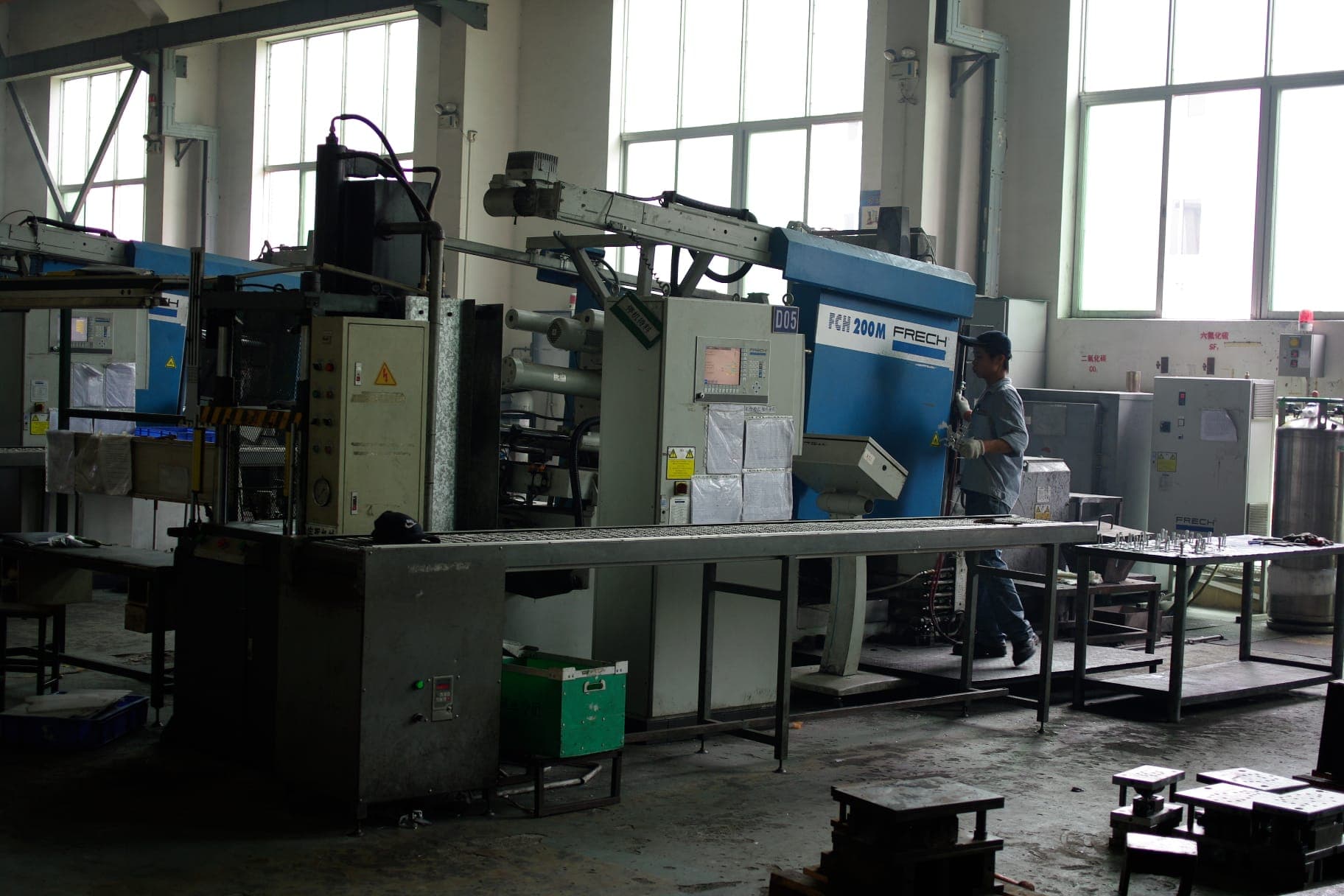
Wrex Products runs conventional (non-vacuum) cold chamber high-pressure die casting in aluminum and zinc, and carries parts through secondary machining and finishing without handing the job to another vendor. We build and maintain die casting tooling in-house, so tool life and part quality stay our responsibility from first shot to last.
Typical applications
- Structural housings and brackets for industrial equipment
- Enclosures requiring EMI shielding or thermal management (aluminum)
- Higher-detail, thinner-wall components (zinc)
- Components requiring secondary machining for critical features (bores, threads, flatness)
Process overview
- 1
Review of your specified alloy
You specify the alloy; we confirm how it will run in our cold chamber process and flag anything about the part geometry that will make it difficult to cast soundly.
- 2
Tool design & build
Die casting tooling, including trim dies, is designed and built in-house or qualified from a transferred tool.
- 3
First-article casting & inspection
Initial castings are measured against the print before production release.
- 4
Production casting
Parts run to schedule with in-process checks at defined intervals.
- 5
Secondary machining, finishing & assembly
Castings move directly into machining, powder coating, or assembly as required.
Materials
- Aluminum alloys — A380.1 (most common), A383.1, A360, A443
- Zinc alloys — Zamak 3, Zinc 3, Zinc 5
- Aluminum-zinc alloys — ZA-3, ZA-5
- Zinc is roughly twice the density of aluminum — alloy choice affects part weight as much as it affects strength and cost
- Conventional non-vacuum cold chamber process for both alloy families. We no longer run hot chamber die casting
- Standard practice uses alloy that may include remelted runners, biscuits, and excess from prior runs of the same alloy
- Virgin alloy is available on request — tell us BEFORE casting begins, not after
- You specify the alloy; we confirm castability and flag geometry concerns during quoting — see Engineering Support below
- Die casting is quoted with finishing included — trim, deburr, and the secondary operations the part needs. We do not sell raw, unfinished castings as a standalone service
Part design considerations
- Wall thickness uniformity to reduce porosity and shrinkage
- Draft angle appropriate to the casting process and finish
- Locations requiring machining after casting (bores, flatness, threads)
- Parting line and gate location relative to cosmetic and functional surfaces
DFM guidance
- Decide how gates come off early — it changes tooling cost. Thin gates can be broken off manually (cheap, no trim tool, but risky on delicate or intricate parts); stronger gates need a trim die, which costs more up front but shears cleanly and protects the casting. Large or intricate parts, or gates near fragile features, generally justify the trim die
- We review casting feasibility — wall thickness, draft, and undercuts — before quoting tooling
- Features requiring tight tolerance are flagged for secondary machining rather than held to as-cast tolerance
- See Die Casting DFM for detailed design guidelines
Quality controls
- We target zero flash on die cast parts and will rework production rather than ship flashed castings
- Parts produced to NADCA (North American Die Casting Association) standards unless your print specifies otherwise
- First-article inspection against the customer print
- In-process dimensional and visual checks during production
- Dimensional and visual inspection only — we do not perform non-destructive testing (no X-ray, no pressure or leak testing). If your part requires NDT, it must be arranged separately by the customer.
Secondary operations available
- CNC machining of cast features
- Powder coating and custom finishing
- Deburring and trim
- Assembly
Frequently asked questions
Do you offer vacuum die casting?
No. We run conventional non-vacuum cold chamber high-pressure die casting only. If your part requires vacuum-assisted casting — typically for weldable, heat-treatable, or pressure-tight castings — we are not the right supplier for it, and we would rather say so up front.
Do you perform X-ray, pressure, or leak testing?
No. We do not perform non-destructive testing of any kind — no X-ray, no pressure testing, no leak testing. Our inspection is dimensional and visual. If your part requires NDT, that testing must be arranged separately by you, and you should tell us at RFQ so expectations are clear from the start.
Do you use remelted material?
Yes, as standard practice. Runners, biscuits, and excess material from prior runs of the same alloy are remelted and reused — this is normal in the die casting industry and keeps part cost down. If your application requires virgin alloy only, tell us before casting begins so we can quote and plan for it; it cannot be applied retroactively to parts already cast.
Should I choose aluminum or zinc?
It depends on strength-to-weight needs, wall thickness/detail requirements, and cost targets — see Aluminum Die Casting and Zinc Die Casting, or ask us during quoting.
Can you machine critical features after casting?
Yes — bores, flatness, threads, and other tight-tolerance features are commonly finished with secondary CNC machining after casting. See Secondary Machining for Castings.
Ready to talk about your project?
Send your drawings or describe your part — an engineer will follow up, not a sales queue.