Capabilities
How our engineering support works — and where it stops
We give manufacturability feedback on the design you supply. We do not select materials or change product design in-house — the customer specifies, and the customer verifies.
What we do
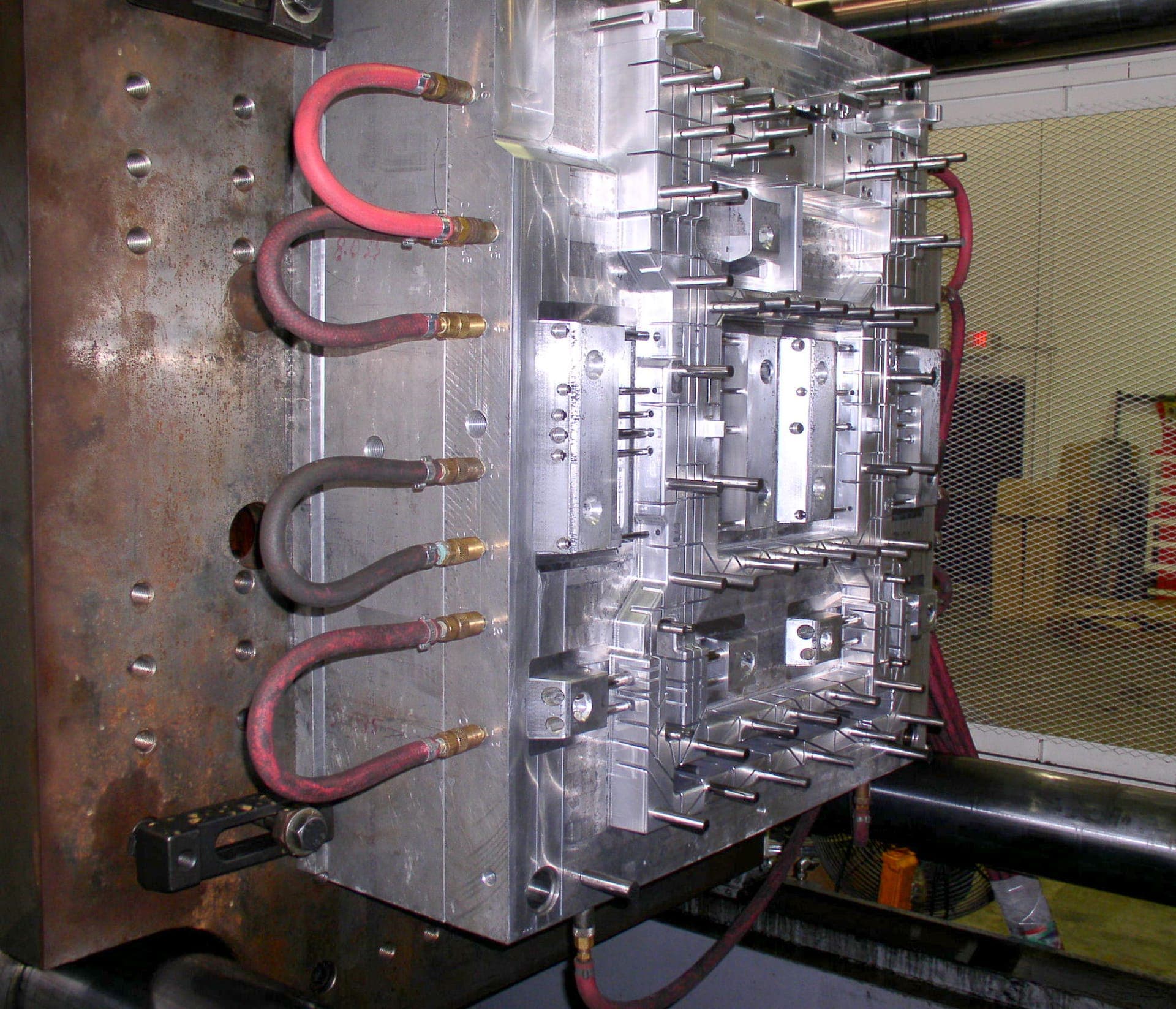
- Review your design for how it will mold, cast, or machine on our equipment — wall thickness, draft, gate and parting line location, ejection, and tolerance feasibility
- Recommend a tooling approach: tool class, cavitation, and steel matched to your production volume
- Flag where a feature will be difficult, costly, or risky to produce, and describe the tradeoff
- Quote secondary operations, finishing, and assembly as part of the same job
- Coordinate a project end to end — tooling, sampling, production, finishing, and assembly — through one engineering point of contact rather than handing you between departments
What we don't do
- Select or specify the material for your part
- Alter or approve your product design
- Determine whether a material or design is suitable for your product's fit, form, function, assembly, or end application
These are product-liability decisions that belong with the party who owns the product and knows its end use. We keep that line clear so it stays clear if a question ever arises later.
Where you need more help than that
Not every customer arrives with a finished design and a specified resin. When you don't, we can connect you with independent providers rather than guess:
Plastic material analysis
Material identification and analysis through an independent third-party laboratory — useful when reverse engineering an existing part or confirming what an incumbent supplier has been running.
Design assistance
We can introduce you to an independent design engineer we have worked with for years, who helps customers turn an idea or a rough concept into a manufacturable design.
Reverse engineering
Working from an existing physical part to produce the model and drawings needed for tooling — again through the same independent design resource.
Who is responsible for the result
Where a third-party provider suggests a material or design solution, the customer is the ultimate party responsible for verifying that recommendation against their own product's fit, form, function, assembly, and application requirements before it is released to production.
Harshal Shah — Engineer
Harshal Shah is the engineering point of contact for new projects and can help end to end — from first review of a model, through tooling and sampling, into production, finishing, and assembly. If you would rather talk an idea through than fill in a form, ask for him.
Color options
Plastic parts can be produced in nearly any color, and we can match to standard color charts. There are three routes to color, and the right one is usually a cost decision:
Color concentrate blended at Wrex
We blend color into natural resin in-house. Typically the lowest-cost route, and the most flexible for moderate volumes or color changes.
Pre-colored resin from a coloring house
The resin arrives already compounded to your color. Best shot-to-shot color consistency, generally at a higher material cost and with minimum-order quantities.
Standard base resin color
Some resins are stocked in multiple standard colors. If one works for your part, it is usually the cheapest and fastest option available.
Send a physical color standard whenever appearance matters — gloss, texture, and resin all shift how a color reads, so two parts matched to the same chart number can still look different side by side.
Die casting process scope
Conventional (non-vacuum) cold chamber high-pressure die casting in aluminum and zinc.
Not offered
- Vacuum-assisted die casting
- Hot chamber die casting (no longer offered — we run cold chamber only)
- X-ray or radiographic inspection
- Pressure testing
- Leak testing
- Any other non-destructive testing (NDT)
If your part requires NDT, that testing must be arranged separately by the customer. Tell us at RFQ so expectations are clear before tooling is committed.
One consequence worth stating plainly: because we run conventional non-vacuum die casting, our castings carry normal levels of internal porosity. Automotive, aerospace, and defense programs frequently require zero-porosity castings, so we are generally not the right supplier for that work. If your specification calls for porosity limits verified by NDT, tell us at RFQ — we would rather decline early than take a program we cannot certify.
Inspection we do provide
Dimensional and visual inspection, first-article inspection against the customer print, and in-process checks during production.
Alloy and remelt
Standard practice uses alloy that may include remelted runners, biscuits, and excess material from prior runs of the same alloy — normal in the die casting industry, and it keeps part cost down.
Virgin alloy is available on request, but you must tell us before casting begins. It cannot be applied retroactively to parts already cast.
Material compliance documentation
RoHS — available on request
RoHS certificates can be provided on request for parts produced at Wrex. Ask at RFQ so the requirement is captured with the job.
REACH — not offered
We do not offer or monitor REACH compliance for parts produced at Wrex. If your program requires REACH documentation, that obligation stays with you and your material supplier — we would rather say so plainly than imply coverage we do not provide.
ITAR — not registered
Wrex Products is not ITAR registered. Programs governed by ITAR (International Traffic in Arms Regulations) are not a fit, and this applies regardless of whether the tooling is built in the US or offshore. If your program is ITAR-controlled, tell us at RFQ and we will be straight about it rather than take work we cannot handle compliantly.
For certifications and quality-system documentation, see Quality & Certifications. For design guidance you can apply before sending an RFQ, see DFM Resources.
Ready to talk about your project?
Send your drawings or describe your part — an engineer will follow up, not a sales queue.